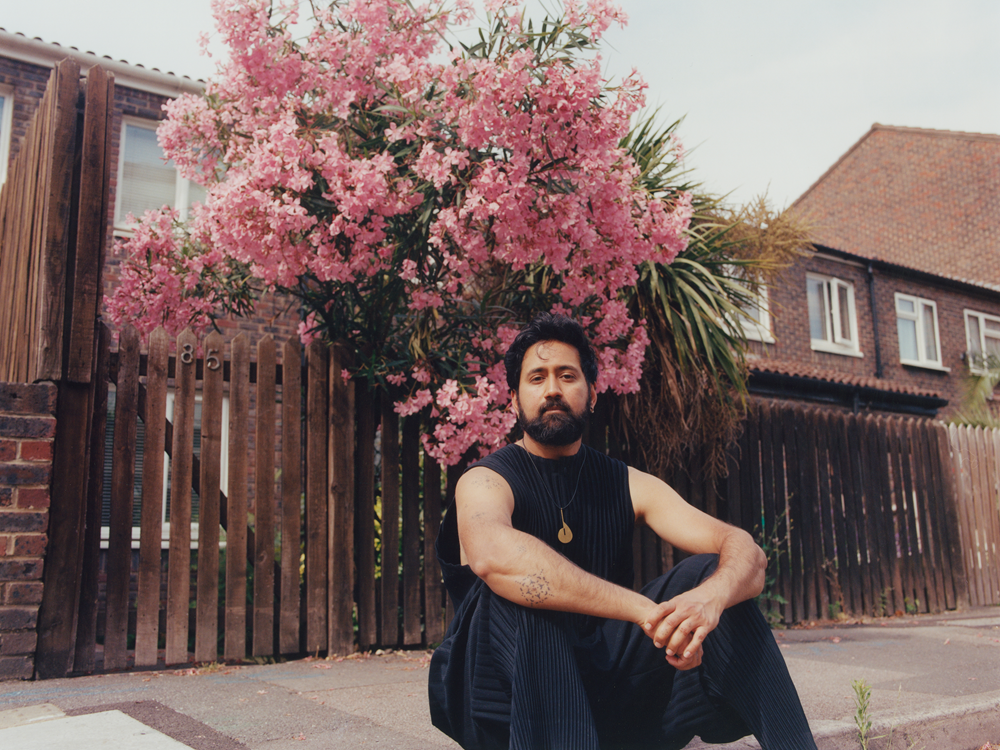
Ahead of his performance at Midday Mantra: Earth Pulse on 23 May, we spoke with drummer, composer and producer Sarathy Korwar about rhythm, improvisation and the evolving role of percussion in his work.
Known for blending jazz, Indian classical music, electronics and experimental composition, Korwar has established himself as one of the most distinctive voices in contemporary music, but his journey began much earlier with the tabla.
I started with the tabla at the age of eight, and along the way I’ve picked up various different percussion instruments, primarily the drum kit, which was the instrument that I always really wanted to play growing up. I started playing the drum kit when I was about 16, and ever since then I’ve sort of shared my time between the tabla and the drum kit as my two main primary instruments.
That dual grounding in Indian classical percussion and jazz drumming continues to shape the way Korwar understands music today. Rhythm, in particular, sits at the centre of his creative language.
My tabla studies and the way rhythm functions and is conceived or visualised in Indian classical music, is my gateway into understanding rhythm in a more broader sense. I think the foundations that I have in the tabla have helped me become a much better composer, because of the way I perceive rhythm and melody.
Korwar’s music moves fluidly between jazz, electronic music, minimalism, free improvisation and South Asian traditions. When asked about the musical foundations that continue to inform his work, he points to both jazz and Indian classical music as equal anchors.
Yeah, I think my joint kind of foundations in jazz and Indian classical music essentially inform the way I perceive music and understand music.
So those two, again, are the major kind of foundational genres for me, but also then sort of learning about composers in the minimalist tradition of music, electronic music, free improvisation all these other traditions now inform the way I play, make music, see music and hear music.
Audiences attending Midday Mantra: Earth Pulse can expect an experience that is immersive, one that reflects Korwar’s recent exploration of percussion as both melodic and emotional force.
I think the audiences can expect hypnotic, slowly changing, evolving grooves and rhythmic patterns.
I think overall the potential of the drums as more than just accompanying instruments, and to see them in their role as these powerful instruments and voices that they are. Hopefully that’s something that audiences will get from the performance.
Joining Korwar for the performance will be long-time collaborator Magnus Mehta, whose instrumentation will add further layers of texture and improvisation to the set.
I’ll be joined by Magnus Mehta, who is a long time collaborator of mine. We’ve been playing together for over ten years, and we’ve really developed a shared language of improvisation together. Magnus will be playing a vibraphone, some pentatonic melodic bells, a hybrid drum kit set up, and I’ll be playing another drum kit with my tabla and kanjira going through a whole bunch of effects.
So expect all kinds of sounds coming from these percussion instruments.
At a time when music often competes for shorter and shorter attention spans, Korwar’s performances invite audiences to slow down, listen closely and immerse themselves fully in sound.
Korwar’s performance offers audiences the chance to experience rhythm in a different way, not simply as accompaniment, but as storytelling, meditation and movement. His work reflects Sampad’s value of being rooted and responsive: honouring the depth of South Asian musical traditions while continually pushing towards new forms of contemporary expression.